Whole grains help many people feel steadier. They are food, not a prescription. This page does not assign one millet to one disease.

Everyday plate

Cook a grain that still has its skin

Use unpolished millets or ragi in place of white rice when you can. Below: names, kitchen notes, and the everyday benefit of each grain. Variety through the week is enough.

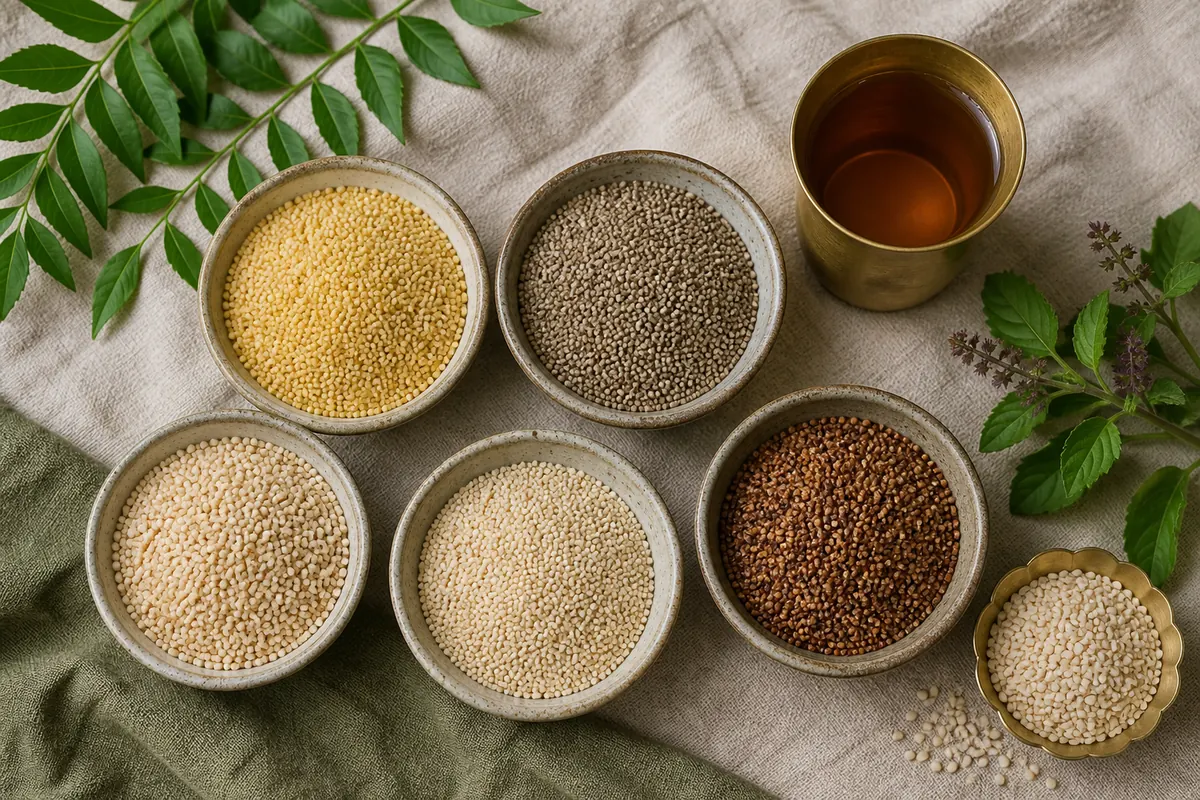
Bowls of unpolished millets on linen
Unpolished millets on linen — soak, cook, and rotate through the week.

Millets are ordinary grains with their bran left on. They are not a medicine and not a replacement for a diabetes or thyroid tablet. Soak them, cook them like rice or as ragi porridge, and rotate two or three kinds through the week so the plate stays interesting.

White rice can stay on some meals if that is what your household eats. The aim is more fibre and minerals from unpolished grain, not a sudden ban. If you have kidney disease, a low-potassium plan, or trouble swallowing, ask your clinician before large millet portions.

Each millet — name, kitchen note, benefit

Scroll sideways on a phone if needed. Benefits are everyday food notes, not disease treatments.

English Telugu Hindi Kitchen note Benefit
Foxtail millet కొర్రలు कंगनी Mild taste, easy first swap for rice Fibre for steadier energy; gentle start for millet beginners
Kodo millet అరికెలు कोदो Earthy, holds a sambar well Filling fibre; supports a heartier, longer-lasting lunch
Barnyard millet ఊదలు सांवा Light, useful on a hot afternoon Light whole-grain fibre without a heavy, sticky feel
Little millet సామలు कुटकी Small grain, cooks quickly Fibre plus easy variety when you rotate grains
Browntop millet అండు కొర్రలు मकड़ा Needs a longer soak; nutty Minerals and fibre for a sturdy dinner plate
Finger millet రాగి रागी Good in ganji or dosa; mineral-dense Calcium-rich kitchen grain; supports everyday bone-friendly plates
Unpolished millets keep more of the outer layers than white rice, so they usually bring more fibre. Start with small portions if your stomach is unused to whole grains, and drink water with meals.

How we cook them here

  1. Wash. Soak 4–8 hours (longer for browntop).
  2. Drain. Use about 1 cup grain to 2½ cups water.
  3. Simmer covered 15–20 minutes, or 3–4 pressure-cooker whistles.
  4. Fluff and serve with dal, rasam, or a vegetable. Add a spoon of sesame or groundnut oil if the plate feels dry.

For a full week-by-week plate with measured amounts, use Diet plans — millets are already rotated there.

Diet plans Kitchen foundations Bones & muscles