Oats · barley
Shared kitchen foods
Useful for both heart-friendly eating and an LDL-friendly plate.
Oats, vegetables, dal, walnuts, and a walk will not replace a statin your doctor already wrote. They are kitchen habits that sit beside the prescription. Fried snacks, excess salt, and sugary drinks work against that same plate.
A lipid lab is how you know LDL, not a millet bowl. Chest pain, sudden breathlessness, or pain in the jaw or left arm is emergency care. This page is education for everyday cooking, not a cardiology clinic.
Ragi / millets
Beans · dal · chickpeas
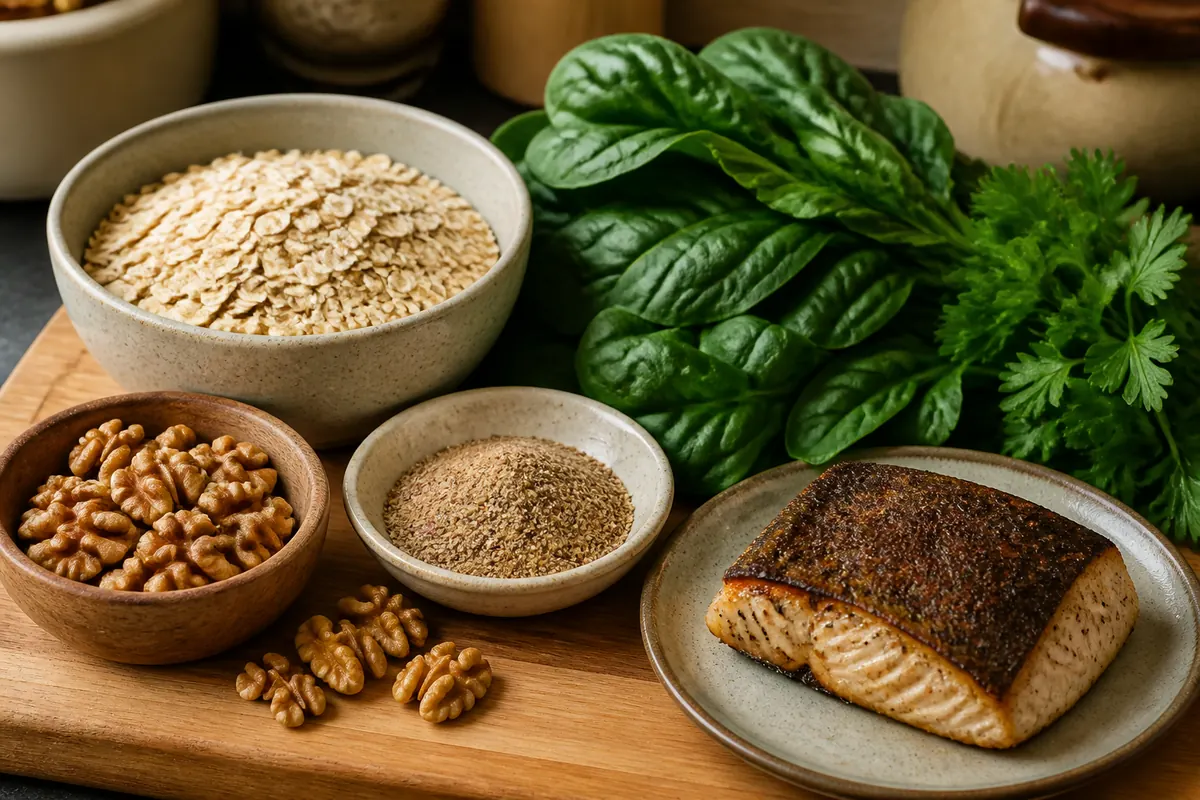
Walnuts · flaxseed / chia
Fish (if you eat it)
Leafy greens · vegetables · fruit
Apples · guava
Low-fat curd
Unsalted nuts · olive / groundnut / canola oil (moderate)
Simple home options
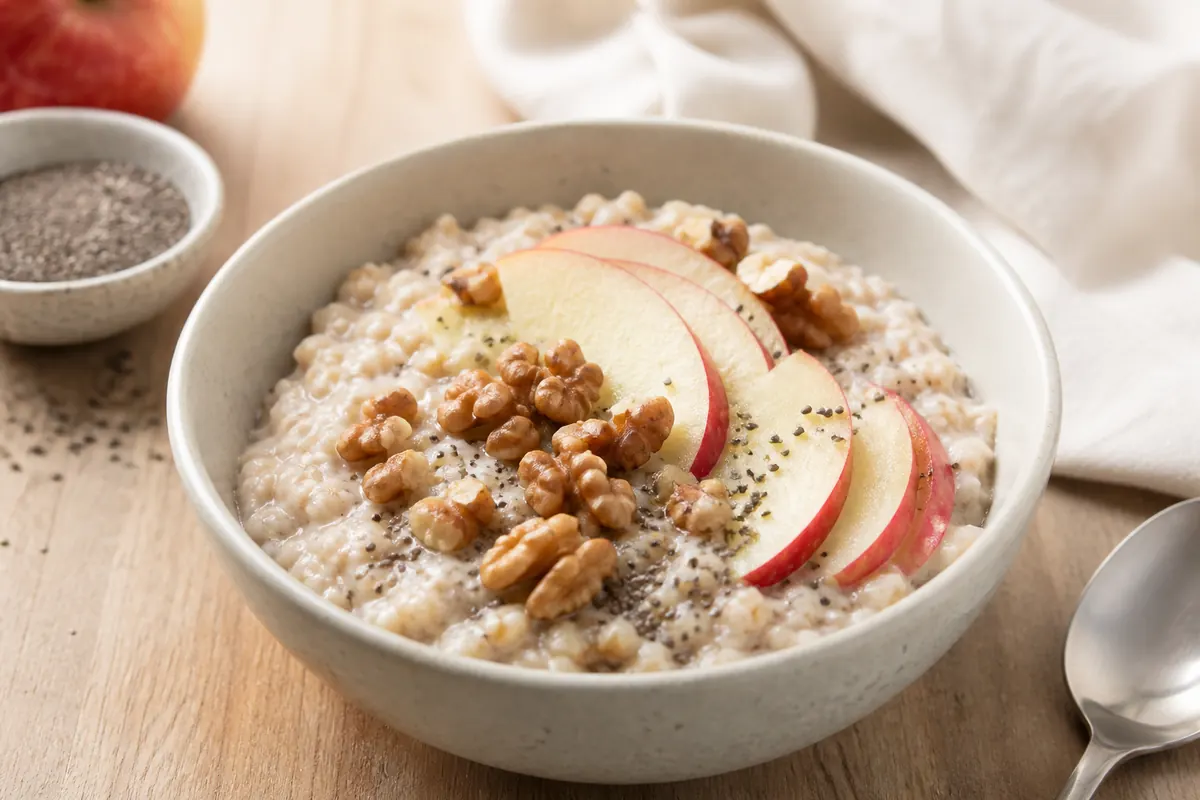
Best combo bowl
Oats + chia or flaxseed + fruit + walnuts
Millet plate
Dal + vegetables + millet
Flaxseed spoon
1 tbsp ground flaxseed with curd or oats
Fish nights
Fish + vegetables 2–3 times / week if you eat fish
Soluble fibre from oats, barley, and legumes can help with cholesterol management. Replacing saturated fats with unsaturated fats is a core part of heart-healthy eating.
Reduce
- Deep-fried foods · bakery foods
- Processed / fatty meat
- Excess ghee / butter · trans fats
- Coconut / palm oil in large amounts
- Excess salt · sugary drinks
Heart habits
Move
A daily walk you can still talk through. If a doctor has cleared light exercise, the standing parts of our workout are fine. Stop for chest pressure.
Salt and smoke
Taste food before a second pinch. Pickles and papad add up. Stopping smoke helps the heart more than any tea on this site.
After a heart attack or a stent, this page is only a conversation about walking and lunch. Your rehabilitation plan wins.
Cholesterol & labs
The main food target is supporting a healthier LDL pattern — not eliminating every milligram of dietary cholesterol.
The lab still wins
Family history, thyroid disease, and kidney or liver trouble can raise cholesterol even on a careful plate. Ask for a fasting lipid profile.
Walk most days
The same walk that helps the heart helps the lipid line. Keep prescribed lipid medicines unless your doctor changes them.
How to use this kitchen pattern without guessing your LDL
Heart-friendly eating and a quieter lipid plate share the same habits: more fibre, more vegetables, unsaturated fats in place of deep-fried snacks, less salt and sugar, walking most days, and sleep. None of that replaces a statin, blood-pressure tablet, or cardiac rehabilitation plan your doctor already set.
A fasting lipid profile is how you know LDL, HDL, and triglycerides. Family history, thyroid disease, and kidney or liver conditions can raise cholesterol even on a careful plate. Chest pain, sudden breathlessness, or pain in the jaw or left arm is emergency care.
A realistic week of plates
- Breakfast most days: oats or ragi porridge with fruit; add ground flaxseed (about 1 tablespoon) if you tolerate it.
- Lunch: millet or brown rice + dal + a heap of cooked vegetables; keep pickles and papad small.
- Snacks: fruit, roasted chana, or unsalted nuts — not bakery puffs every evening.
- Fish 2–3 evenings a week if you eat fish; otherwise dal, beans, or low-fat curd for protein.
- Cooking fat: prefer groundnut, mustard, or olive oil in moderate spoons; reduce repeated deep-frying of the same oil.
- Movement: a daily walk you can talk through; add chair-supported strength from Exercises if cleared.
Shopping list that matches this page
Oats or barley, one millet, mixed dal, leafy greens, onions/tomato, apples or guava, walnuts or flaxseed, low-fat curd, and a fish you already cook. You do not need specialty “heart powders.”
Common traps
- “Zero cholesterol” biscuits can still be high in sugar and refined flour.
- Coconut oil or ghee in large daily amounts works against an LDL-friendly pattern for many people.
- Stopping prescribed lipid medicine because oats “feel healthier” is unsafe — change medicines only with your clinician.
Short answers
Do eggs ruin cholesterol?
For many people, overall dietary pattern matters more than one egg. Ask your clinician if you already have very high LDL or heart disease.
Is millet a cholesterol cure?
No. Millets are a fibre-rich grain swap. Labs and medicines still decide treatment.
How soon will lipids change?
Food and walking habits are judged over weeks to months with repeat labs — not overnight.